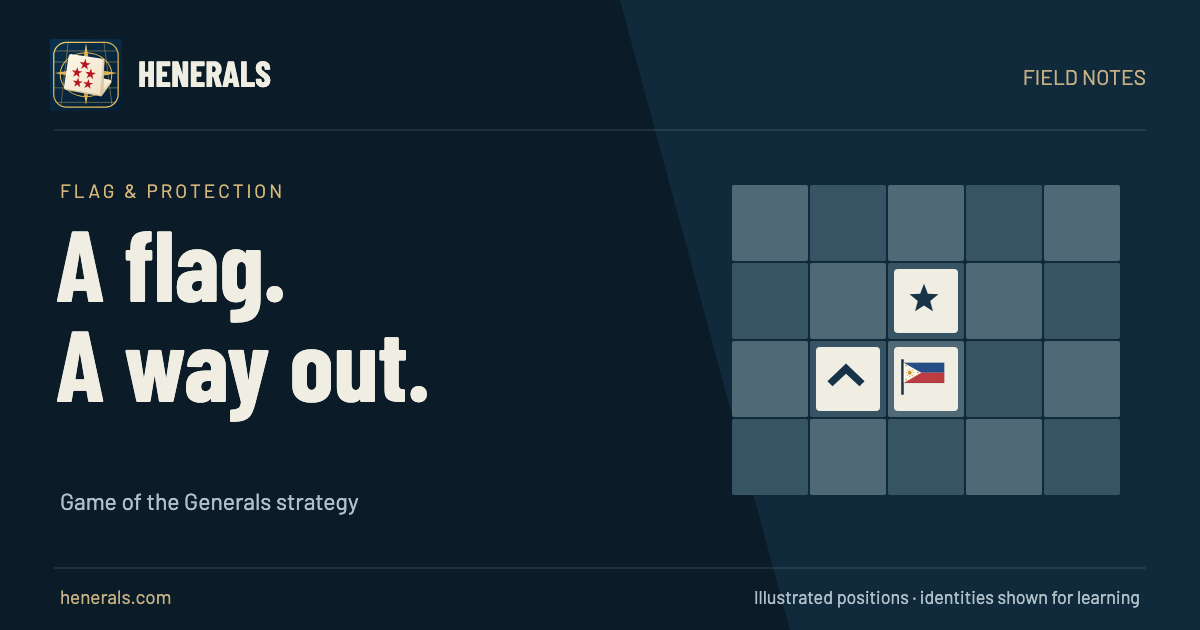
The flag loses to every non-flag piece. It can capture the opposing flag when it attacks, and it can win by reaching the farthest row and surviving the opponent's next turn. Those two winning routes demand more than hiding in a corner.
Guard routes, not shapes
A familiar cluster may feel secure, but repeated shapes become clues. Build protection around escape squares and interception paths. A defender two squares away may be more useful than one pressed against the flag if it can meet an approaching piece first.
Move after the board changes
Do not launch a crossing because a lane merely looks open. Wait until challenges have removed enough nearby pieces that the opponent cannot easily redirect. The best flag move often follows an unrelated exchange on the other wing.
Keep the story uncertain
Move another low-profile piece as though it matters. Protect two possible objectives. The opponent has to spend moves testing a story, and every test gives your real flag more time.